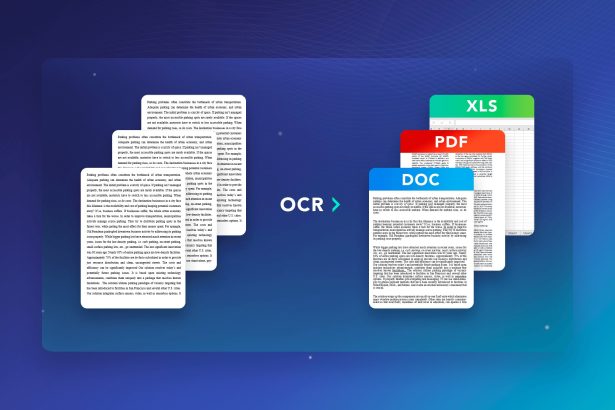



Turning a photo of text into editable words used to feel like magic. Today, optical character recognition (OCR) does that magic for you, often for free and in seconds. This article breaks down how online OCR works, which free tools are worth trying, and practical tips to get the cleanest output from receipts, screenshots, scanned pages, or whiteboard photos. Read on and you’ll be extracting searchable text without fuss.
What OCR actually does and why it matters
At its core, OCR analyzes the pixels in an image and converts shapes that look like letters into actual text characters. That means a grocery receipt, a photographed book page, or a scanned business card can become editable text you can search, copy, and archive. The technology has improved dramatically: modern OCR handles multiple languages, recognizes fonts, and can even reconstruct basic formatting like columns and bold text.
The practical benefits are immediate: searchable archives, copyable quotes, and faster data entry. For people who scan invoices, digitize family photos, or manage receipts for taxes, OCR removes hours of manual typing. It’s also a baseline feature in accessibility tools, helping screen readers and other assistive technologies interpret printed materials.
How online OCR services work behind the scenes
Most online OCR services follow a predictable pipeline: you upload an image, the service preprocesses it to improve contrast and deskew the page, then a recognition engine maps image patterns to characters. Some sites use cloud versions of open-source engines like Tesseract; others run proprietary neural networks trained on millions of document samples. The preprocessing steps—noise reduction, binarization, and deskewing—often make the biggest difference in accuracy.
After recognition, the service outputs plain text, a searchable PDF, or a formatted document. Many free services support common file types like JPG, PNG, and PDF, and some can retain layout elements such as columns or simple tables. The trade-off with free offerings is usually limits on file size, number of pages, or the number of conversions per day.
Free vs. paid services: what you should expect
Free online OCR tools are excellent for one-off jobs: quick scans of receipts, short articles, and occasional document conversions. They’re convenient because you don’t need to install software and you get immediate results in your browser. However, free tiers commonly have constraints—watermarks, file-size caps, or fewer supported languages—and they often lack advanced features like high-fidelity layout retention or guaranteed data privacy.
Paid services and desktop software fill those gaps by offering batch processing, higher accuracy on complex layouts, and local processing so data never leaves your machine. If you routinely digitize hundreds of pages, handle sensitive documents, or need automation, investing in a paid plan or a local OCR workflow saves time and reduces risk.
Choosing a free online OCR tool
Not all free OCR sites are created equal, and the right choice depends on your needs: quick text extraction, searchable PDFs, language support, or privacy. Google Drive’s built-in OCR is fast and convenient for Google users and keeps your file in your account, while OCR.space and OnlineOCR.net are recognizable options for quick jobs without a login. Microsoft OneNote also includes OCR for images pasted into notes and works well for casual use.
Here’s a simple comparison to help you decide based on common priorities and trade-offs.
| Tool | Pros | Cons |
|---|---|---|
| Google Drive (Docs) | Free, integrates with Drive, good for common formats | Layout retention is basic; needs Drive account |
| OCR.space | No signup needed, supports multi-language, JSON output | File-size limits on free tier |
| OnlineOCR.net | Simple interface, converts to Word/Excel | Page limits and occasional formatting loss |
Step-by-step: extracting text from an image
Start with a clear, well-lit photo or a good scan. Crop out unnecessary margins, rotate the image so text lines are horizontal, and save as PNG or high-quality JPG to avoid compression artifacts. If the document is multi-page, export to a multipage PDF before uploading—many online tools accept PDFs and preserve page order.
Next, upload the file to the site of your choice, choose the output format (plain text, Word, or searchable PDF), and run the recognition. Review the results and correct obvious OCR errors—common issues include misread numbers and confusions between letters like O and 0 or l and 1. Finally, save or export the corrected text and, if needed, run a quick spellcheck to catch missed mistakes.
- Prepare image: crop, rotate, and enhance contrast.
- Upload to an online OCR service or import into Google Drive.
- Select language and output format, then run OCR.
- Proofread and export the final document.
Tips to improve OCR accuracy
Good input beats clever software: aim for 300 DPI or higher when scanning printed pages, use even lighting for photos, and avoid angled shots. Choose the correct language in the OCR settings—mixed-language documents perform better when you specify primary languages. Remove background patterns when possible, because decorative paper or watermarks confuse recognition engines.
For tighter workflows, batch preprocess images with a simple image editor or a script that adjusts contrast and straightens pages automatically. When dealing with tables, try exporting to Word or Excel formats and manually check column boundaries. For handwriting, expect lower accuracy; specialized handwriting recognition tools or manual transcription will often be necessary.
- Use high resolution and uniform lighting.
- Choose correct language options.
- Deskew and crop images before upload.
- Proofread and run spellcheck on OCR output.
Privacy, limits, and when to choose local OCR
Any time you upload documents to a free website, consider privacy. Receipts and public articles are low risk, but financial records, IDs, and legal documents deserve caution. If privacy matters, prefer tools that run locally—desktop Tesseract or paid enterprise services that promise data retention policies—or use a trusted cloud provider where you control the account.
Finally, remember that free online OCR is a practical, accessible tool rather than a perfect solution. For most personal and small business needs it saves time and error, and for higher-volume or sensitive projects it points the way to desktop or paid solutions. Try a few services, apply the prep tips above, and you’ll quickly learn which workflow fits your documents and privacy comfort level.
My quick real-life example
Recently I photographed a stack of old handwritten notes and used Google Drive OCR to pull text for archive searching. The printed sections converted with near-perfect accuracy after I cropped and boosted contrast; the handwriting required manual cleanup but saved several hours of typing. That small win—searchable text where there had been none—was the moment OCR stopped feeling like a novelty and started feeling like a practical tool.